Quick Overview
AI improves customer experience in three measurable ways: faster response times through automated support (reducing wait times from minutes to seconds), more relevant recommendations through behavioral analysis (matching products and content to individual preferences), and proactive service through predictive models that identify problems before customers report them. These improvements work best for high volume, repetitive interactions where speed and consistency matter more than nuance. AI does not improve experiences that depend on empathy, judgment, or complex problem solving. The trade off every company faces is deciding where the speed and scale of automation add value and where they strip away the human connection that builds loyalty. Companies that automate the right interactions see measurable satisfaction improvements. Companies that automate the wrong ones, particularly complaint resolution, sensitive account issues, or emotionally charged situations, damage relationships that cost far more to rebuild than the automation saved.
Introduction
Most companies approach AI in customer experience by asking which tools to buy. Chatbot platforms, recommendation engines, sentiment analysis software. The assumption is that adding AI to customer touchpoints automatically makes the experience better.
That assumption is wrong roughly half the time. AI applied to the right interaction (answering "where is my order?" at 2 AM) genuinely improves the experience. AI applied to the wrong interaction (responding to a billing dispute with a scripted chatbot loop) makes the experience actively worse. The tool is not the variable. The interaction type is.
What actually determines whether AI helps or harms customer experience is a decision most companies skip: categorizing every customer interaction by whether it requires speed (AI wins) or empathy (humans win), then deploying accordingly. Companies that make this distinction see improvements. Companies that apply AI uniformly across all touchpoints create new frustration that replaces the old friction.
This post covers where AI concretely improves customer experience, where it damages it, how to implement it without alienating customers, and which interactions should remain entirely human.
What Does AI Actually Change About Customer Experience?
AI changes customer experience through four specific mechanisms. Understanding each one prevents the mistake of expecting AI to improve everything uniformly.
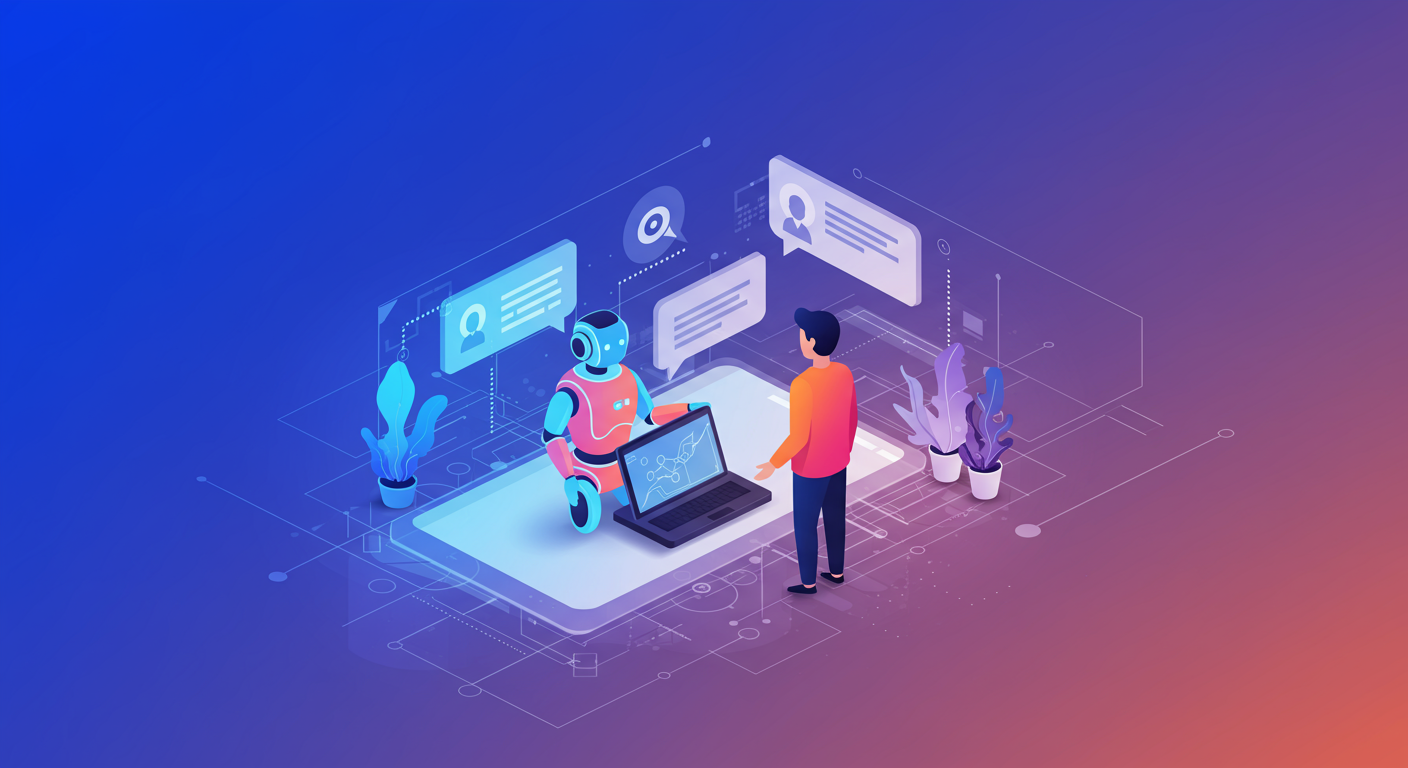
Response speed at scale. The most immediate and measurable impact. AI handles common questions (order status, return policies, account information, store hours) in seconds rather than minutes. This matters because 60% of customer inquiries are repetitive questions with straightforward answers. Before AI, these queries occupied human agents who could have spent that time on complex problems. After AI, the simple queries resolve instantly and human agents focus on situations requiring judgment. The customer with a simple question gets a faster answer. The customer with a complex problem gets a more attentive human agent. Both experiences improve.
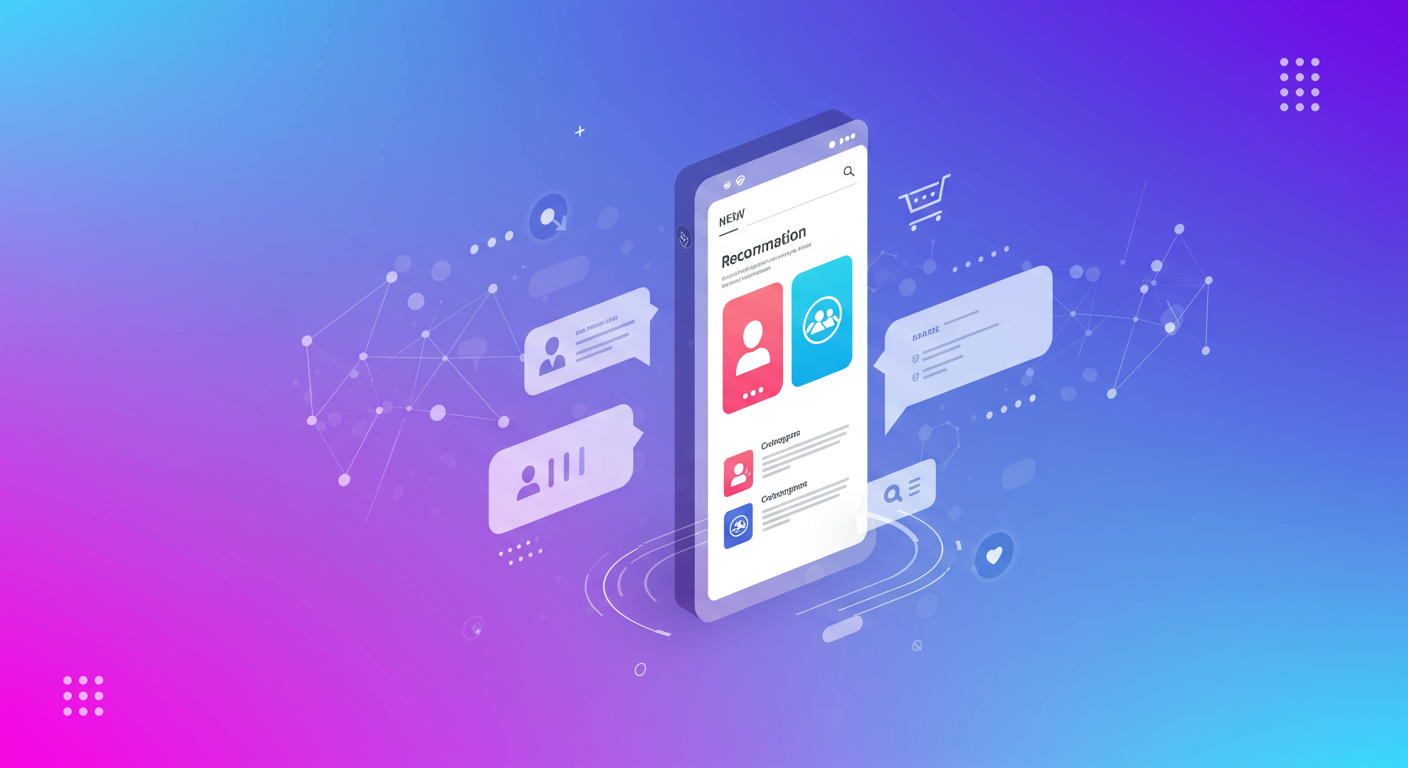
Personalization through behavioral data. AI analyzes what a customer has purchased, browsed, clicked, and ignored to surface relevant products, content, or offers. An ecommerce site showing running shoes to someone who bought running socks last week is basic personalization. Genuine AI personalization goes deeper: recognizing that a customer who browses extensively but rarely purchases responds better to comparison guides than discount offers, or that a customer who purchases every 45 days is likely to buy again soon and should receive a reminder rather than a discount. The non obvious insight: personalization that is too accurate feels intrusive. A customer who researched a medical condition and then sees related product ads feels surveilled, not served. Effective personalization stays within the domain the customer expects.
Predictive service. AI identifies patterns that signal an upcoming problem before the customer reports it. A subscription service detecting declining usage over three months can reach out proactively rather than waiting for a cancellation request. A software platform identifying that a customer repeatedly visits the help documentation for the same feature can offer targeted guidance before the customer submits a ticket. Predictive service transforms the experience from reactive (customer has problem, contacts support, waits for resolution) to proactive (company identifies problem, contacts customer, offers solution). This is where AI creates the most differentiated experience because most competitors still operate reactively.
Consistency across channels. A customer who starts a conversation on web chat, continues via email, and follows up by phone expects continuity. AI maintains context across channels so the customer does not repeat themselves. Without AI, each channel operates independently and the customer restates their issue at every touchpoint. This is not glamorous technology, but it eliminates one of the most common customer frustrations.
Where AI Improves Customer Experience the Most
Not every AI application delivers equal value. Some use cases produce measurable improvement. Others produce marginal gains that do not justify the implementation cost.
Tier 1: High impact, proven results. Automated responses for order tracking, account inquiries, and FAQ resolution represent the highest ROI application. These interactions are high volume, low complexity, and time sensitive. Customers asking "where is my package?" do not want empathy. They want an answer in 5 seconds. AI delivers this perfectly. Dedicated support platforms such as Intercom Fin, Zendesk AI, or Tidio handle these interactions across chat, email, and messaging. SweetPilot works one step earlier: its support employee, Nova, drafts the answer from your help documents and a person sends it.
Tier 2: High impact, requires quality data. Product and content recommendations based on behavioral analysis produce strong results when the underlying data is clean and comprehensive. The requirement is at least 3 to 6 months of behavioral data per customer to generate meaningful patterns. Companies with sparse data or short customer lifecycles see negligible improvement from recommendation engines. The scenario: a B2B SaaS company with 500 customers who each have 18 months of usage data will see strong recommendation results. A consumer app with 50,000 users who churn within 30 days will not.
Tier 3: Valuable but underused. Proactive outreach based on predictive signals. Most companies collect the data needed for predictive service but never act on it. Usage decline, support ticket frequency, feature adoption patterns, and billing changes all signal customer satisfaction or risk. AI that monitors these signals and triggers appropriate outreach (a check in email, a personalized tutorial, a proactive discount) catches problems before they become cancellations. The reason this is underused: it requires cross functional coordination between support, product, and marketing teams that most organizations have not established.
Tier 4: Low impact, commonly oversold. Sentiment analysis on social media mentions and survey responses sounds valuable but rarely changes operational decisions in meaningful ways. The output is typically a dashboard showing sentiment trending slightly positive or slightly negative, which confirms what the support team already knows from daily interactions. Companies with fewer than 10,000 monthly customer interactions rarely benefit from sentiment analysis tools. The data volume is too low to surface patterns that are not already visible.
How to Implement AI in Customer Experience Without Alienating Customers
Implementation fails when it prioritizes company efficiency over customer preference. These steps prevent that.
- Map every customer interaction by complexity and emotional weight. Create a simple grid: one axis is complexity (simple to complex), the other is emotional intensity (low to high). "Where is my order?" is simple and low emotion. "My account was charged incorrectly" is medium complexity and high emotion. "I need to cancel because I lost my job" is low complexity but extremely high emotion. AI handles the first category well, partially handles the second, and should never handle the third.
- Start with the highest volume, lowest emotion interactions. These are the safest to automate and produce the fastest ROI. Order status, store hours, return policy questions, password resets, and basic account information. Automate these first. Measure resolution time and customer satisfaction before expanding.
- Build an obvious escape route to a human agent. Every automated interaction must offer a clear, immediately accessible path to a human. Not "please wait while we transfer you" after three failed bot attempts. A visible option from the first message: "Talk to a person" or "I need more help." Customers tolerate automation when they know a human is available. They resent automation when it feels like a wall.
- Never pretend the AI is a human. Identify automated responses clearly. "This is an automated response" or a bot name that signals non human interaction. Customers who discover mid conversation that they have been talking to a bot feel deceived. Customers who know from the start accept the interaction on its own terms.
- Measure customer effort, not just resolution rate. A chatbot that resolves 80% of inquiries sounds successful until you discover that 30% of those "resolutions" involved the customer abandoning the conversation out of frustration. Track customer effort score (how hard did the customer work to get help?) alongside resolution rate. Low effort plus high resolution equals genuine improvement. Low effort plus low resolution means customers are giving up.
- Review AI responses monthly for accuracy and tone. AI models drift over time. Responses that were accurate at launch may become outdated as products, policies, or pricing change. Assign someone to audit a sample of AI responses monthly. Fix inaccuracies immediately. Tone issues (too formal, too casual, confusing phrasing) require retraining or prompt adjustment.
Where AI Makes Customer Experience Worse
AI damages customer experience in predictable situations that companies deploy it in anyway, usually because the efficiency savings look attractive on a spreadsheet.
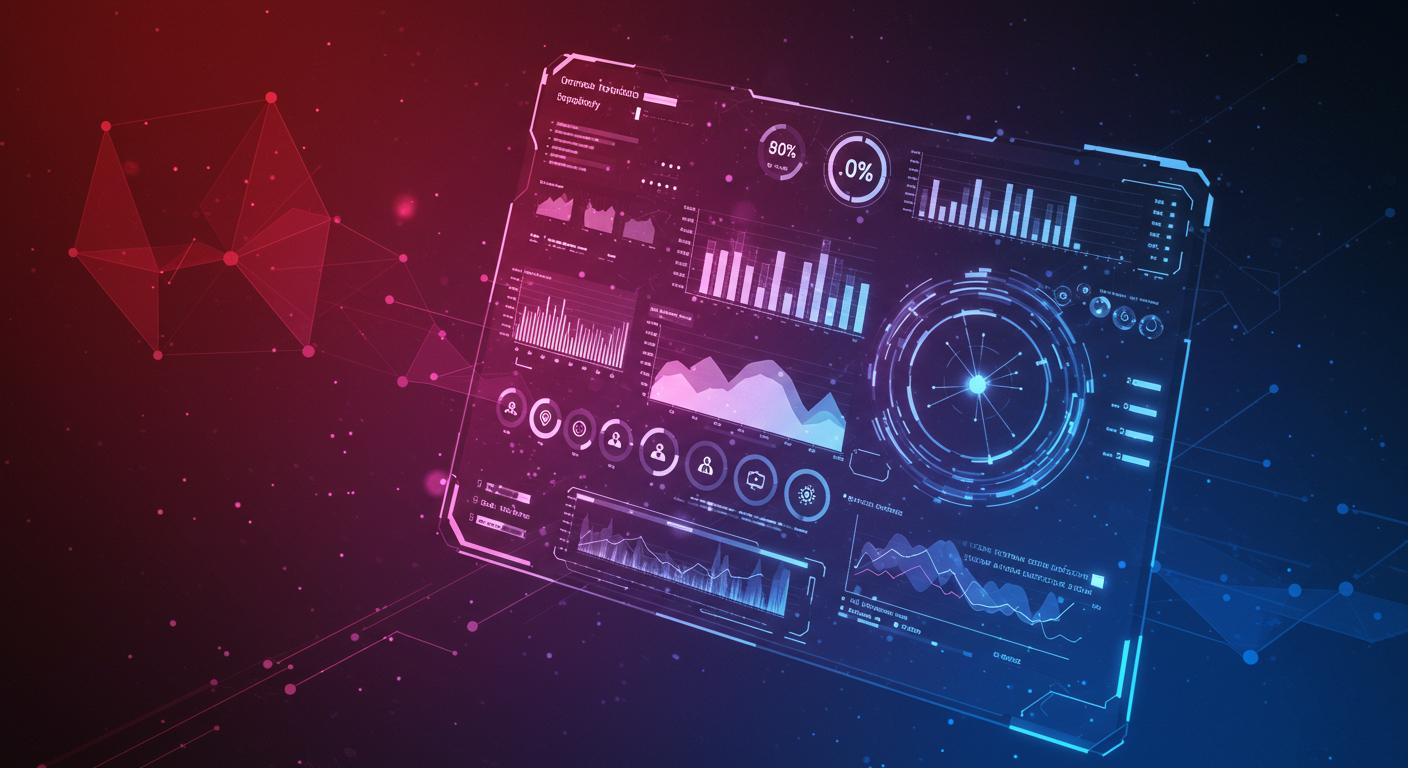
Complaint resolution without human escalation. A customer with a genuine problem who encounters a chatbot loop (repeating the same scripted options without reaching resolution) becomes more frustrated than if they had waited five minutes for a human agent. The original problem compounds with a new problem: feeling ignored. Companies that deploy AI for complaint handling without instant human escalation see support satisfaction scores drop even as resolution volume increases. The numbers look good internally while the customer experience deteriorates.
Personalization that crosses into surveillance. When a customer receives a recommendation clearly based on something they did privately (a search they did not expect to be tracked, a conversation they had near a smart device, activity on a different platform), the experience feels invasive. The line between helpful and creepy is subjective and varies by customer. The practical rule: personalize based on actions the customer took directly on your platform. Never personalize based on inferred or cross platform data unless the customer explicitly opted in.
Automated responses to emotionally charged situations. A customer announcing a death in the family to cancel a service, reporting fraud on their account, or expressing genuine distress needs a human response. An AI response in these situations, no matter how well written, feels cold. The customer remembers the company responded to their crisis with a bot. That memory destroys loyalty permanently. These interactions are low volume (typically under 2% of total contacts) and do not create meaningful efficiency gains when automated. The risk reward calculation never favors automation here.
Chatbots that cannot admit they do not know. A chatbot that confidently provides wrong information is worse than one that says "I do not know, let me connect you with someone who does." Many AI implementations are tuned to always provide an answer, which means they fabricate responses when the correct answer is not in their knowledge base. A customer who follows bad advice from a chatbot and then has to contact support again to fix the resulting problem has a worse experience than if the chatbot had simply escalated at the start.
Over automation that eliminates all human touchpoints. Some companies, attracted by cost savings, remove human support entirely and route everything through AI. This works until a situation arises that AI cannot handle (and it always does). Customers with no path to a human feel trapped. The cost savings from eliminating human support are real, but the customer lifetime value destruction from frustrated, unresolved cases offsets them within 6 to 12 months.
Which Customer Interactions Should Stay Human?
The decision of what to automate and what to keep human is the most important strategic choice in AI customer experience. This framework makes the decision systematic rather than intuitive.
The Complexity and Empathy Matrix. Every customer interaction has two measurable dimensions. Complexity refers to how many steps, variables, or judgment calls the resolution requires. Empathy refers to how emotionally invested the customer is in the outcome. These two dimensions create four quadrants, each with a clear automation recommendation.
Low complexity, low empathy: fully automate. Order tracking, password resets, FAQ answers, store locator, basic account information. These interactions benefit from speed and lose nothing from automation. Customers prefer instant AI responses for these. Keeping humans on these interactions wastes their skills.
Low complexity, high empathy: automate with immediate human backup. Cancellation requests, refund processing, subscription changes. The mechanics are simple but the customer's emotional state matters. AI can handle the transaction itself, but a human should be immediately available if the customer signals frustration, confusion, or emotional distress. SweetPilot keeps the human in by default: Nova drafts the reply and nothing is sent until a person approves it.
High complexity, low empathy: human led with AI support. Technical troubleshooting, multi step onboarding, custom configuration. These require expertise and problem solving that AI cannot reliably provide. AI supports by pulling relevant documentation, suggesting solutions based on similar cases, and handling administrative follow up after the human resolves the issue.
High complexity, high empathy: fully human. Dispute resolution, crisis response, strategic account management, retention conversations with high value customers. These interactions define the customer relationship. No AI involvement beyond providing the human agent with context and history. The agent needs full autonomy to make judgment calls, offer exceptions, and demonstrate genuine understanding.
Companies that map their interaction volume across these four quadrants typically discover that 50 to 60% of interactions fall in the first category (fully automate), 20 to 25% in the second (automate with backup), 10 to 15% in the third (human led), and 5 to 10% in the fourth (fully human). This means AI can appropriately handle the majority of interactions while the minority that truly require humans receive better attention because agents are not buried in simple queries.
FAQs
Q1: How can AI improve customer experience?
Answer: AI improves customer experience by providing instant responses to common questions (reducing wait times from minutes to seconds), personalizing recommendations based on behavioral data, predicting customer needs before they are reported, and maintaining context across communication channels so customers do not repeat themselves. The improvement is strongest for high volume, low complexity interactions where speed matters more than empathy.
Q2: What are the risks of using AI in customer experience?
Answer: The main risks are automating emotionally sensitive interactions where customers need human empathy, personalization that feels invasive rather than helpful, chatbots that provide wrong answers confidently instead of escalating, and removing human support options entirely. Each of these damages customer trust and loyalty in ways that offset the efficiency gains from automation.
Q3: Can AI replace customer service agents?
Answer: AI replaces agents for simple, repetitive interactions like order tracking, FAQ responses, and account inquiries. It cannot replace agents for complaint resolution, technical troubleshooting, crisis response, or relationship building with high value accounts. The most effective approach uses AI for 50 to 60 percent of interactions and redirects human agents to the complex, emotionally significant situations where their skills create the most value.
Q4: How do you measure whether AI is improving customer experience?
Answer: Track customer effort score (how hard customers work to get help), resolution rate, first contact resolution rate, and customer satisfaction per interaction type. Compare AI handled interactions against human handled interactions for the same query types. Also measure escalation rate: a high percentage of AI interactions escalating to humans signals the AI is not resolving effectively and is adding friction rather than removing it.
Q5: What is the best AI tool for customer experience?
Answer: The best tool depends on your primary use case. For automated multi channel support, platforms like Intercom Fin or Zendesk AI answer customers directly. For drafted email replies that a person approves, SweetPilot's Nova writes from your own help documents. For recommendation engines, tools like Dynamic Yield or Algolia serve ecommerce specifically. For predictive customer health scoring, Gainsight or Totango work for subscription businesses. Select based on your highest volume customer interaction type, not on feature count.
Q6: Should small businesses use AI for customer experience?
Answer: Yes, but only for high volume simple interactions. A small business receiving 50 to 100 support inquiries daily benefits from automating order tracking, return policies, and FAQ responses. A small business receiving 5 to 10 inquiries daily does not generate enough volume to justify the setup cost. The threshold is roughly 30+ repetitive inquiries per day before AI support automation produces meaningful time savings.nsure their AI initiatives deliver value and enhance customer satisfaction.
Conclusion
AI improves customer experience when it is applied to interactions where speed and consistency matter more than empathy and judgment. That distinction is not a limitation. It is the operating principle that separates effective deployments from ones that damage customer relationships.
The practical step is mapping your customer interactions across the complexity and empathy matrix, automating the bottom left quadrant first, and measuring customer effort score alongside resolution rate. Most companies discover that automating 50 to 60 percent of interactions frees human agents to provide dramatically better service on the remaining 40 to 50 percent.
The strategic implication is that AI does not replace human customer service. It concentrates it. Instead of spreading human attention thinly across every interaction, AI handles the interactions that never needed a human in the first place, and your team's energy goes entirely to the moments that define whether a customer stays or leaves.