Quick Overview
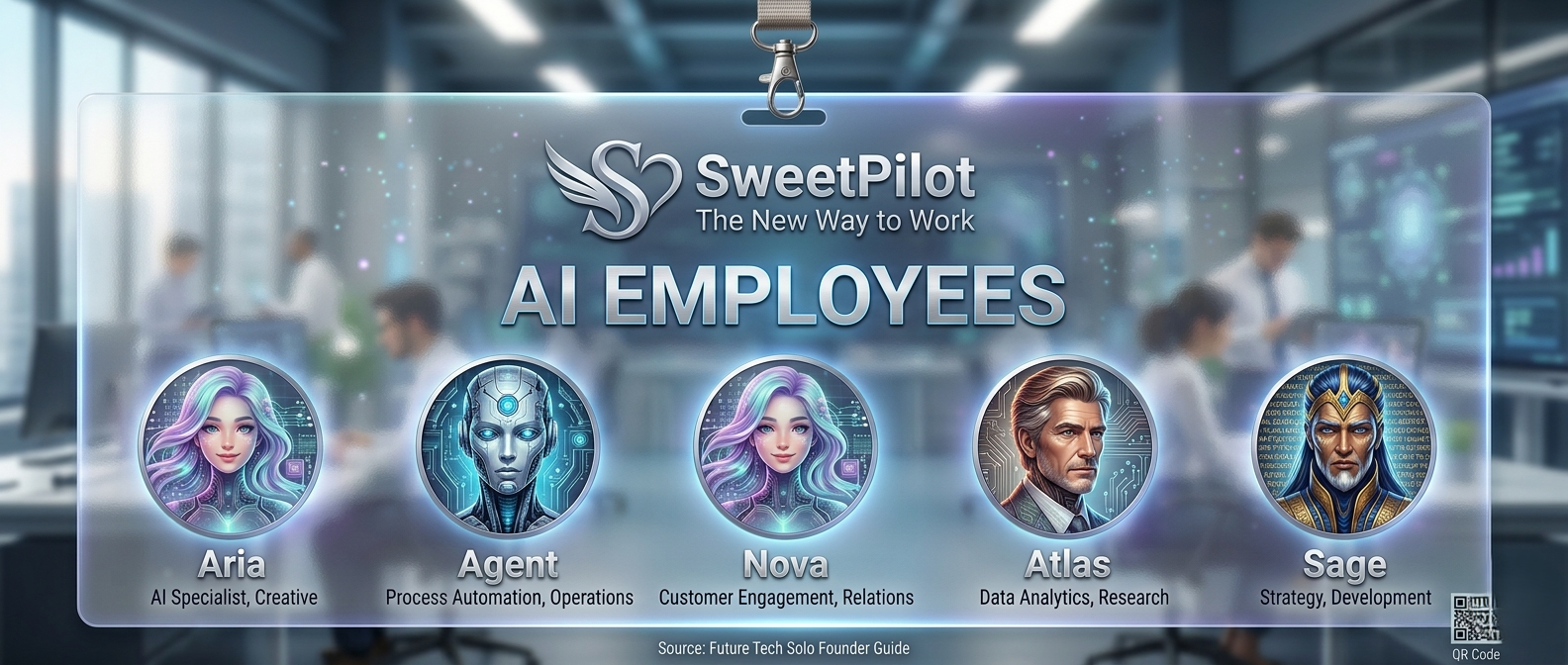
An AI employee is a virtual worker built to perform a specific business role rather than answer general questions. Unlike chatbots, they remember your brand. Unlike automation tools, they can reason, write, and produce finished output. SweetPilot's AI team includes named employees like Ink (copywriting), Aria (social media), and Atlas (data analysis) along with fourteen more specialists. This guide explains what AI employees are, how they handle real tasks, how they differ from existing software, and exactly how to bring them into your business in three simple steps.
Introduction
In the realm of modern business, the concept of an AI employee is gaining traction. Many assume that AI employees are merely advanced software programs that replace human workers. However, this assumption overlooks their potential to complement human efforts rather than replace them entirely. Understanding the true nature of AI employees requires a shift in perspective from replacement to augmentation.
AI employees are not just about cutting costs or replacing human labor; they are about enhancing the capabilities of the workforce. They can handle repetitive and time-consuming tasks, allowing human employees to focus on strategic and creative endeavors. This synergy can lead to increased productivity and innovation within organizations.
This post will explore what AI employees are, how they function, and their role in the workplace. It will not cover the technical aspects of AI development or the ethical implications of AI in the workforce, focusing instead on practical applications and benefits.
By the end of this discussion, you will have a clearer understanding of the potential impact of AI employees on your business operations. The decision to implement AI employees involves weighing the benefits against potential challenges, such as integration complexities and the need for human oversight.
What Is an AI Employee? How Virtual AI Workers Are Replacing Old Workflows
Businesses are hiring at record pace in 2026. But the smartest ones aren't just adding human headcount. They're building AI teams alongside their human team, and the productivity gap between the two camps is widening every quarter.
If you've heard the term "AI employee" but aren't sure what it actually means or how it differs from the AI tools you're already using, this guide is for you. We'll define the concept in plain language, walk through how AI employees work behind the scenes, and show you exactly what they can do today using SweetPilot's named agents as real examples.
What Is an AI Employee?
An AI employee is a virtual AI worker built to perform a specific business role, the way a human team member would. They have a defined job (SEO specialist, copywriter, support rep, sales associate), a memory of your business (your brand voice, products, SOPs, and customers), and the ability to take a task assignment and return a finished deliverable.
A few things make an AI employee different from the AI tools you might already use:
- Role specialization. An AI employee isn't a generalist. It's trained for a specific function and excels at that function rather than being okay at everything.
- Persistent memory. It remembers your business across every task, not just inside one chat session.
- Task ownership. You assign work, it produces deliverables, and it can run on a schedule without daily prompting.
- Multi step reasoning. It can plan, research, draft, revise, and deliver a finished output in one go.
Think of it less like "a smarter chatbot" and more like "a junior team member who never sleeps and never forgets."
How Do AI Employees Work?
Every AI employee runs on four building blocks:
1. Role Training
Each agent ships with a defined role, including its job description, the kinds of tasks it can handle, the output formats it produces, and the tone it uses. A copywriter agent writes blog posts and emails. A support agent drafts customer replies. A social media agent writes captions and schedules posts.
2. Brand Memory (the "Brain")
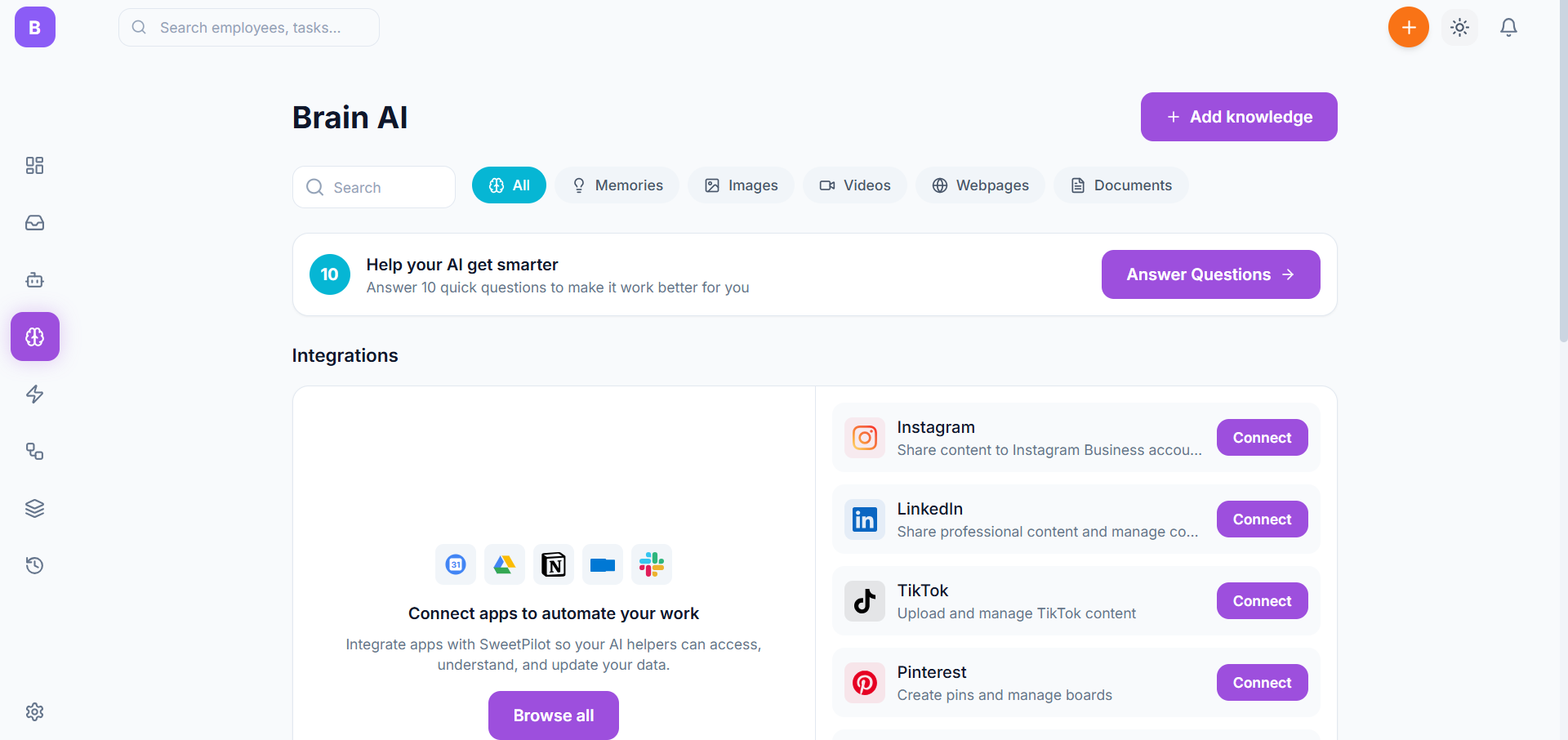
Every AI employee reads from a shared knowledge base trained on your business. On SweetPilot this is called Brain AI. You upload your brand guidelines, product docs, SOPs, customer personas, and example outputs. Every agent uses this Brain so their work sounds like your business, not a generic assistant.
3. Task Execution
You assign a task, the agent plans the steps, gathers context from Brain, generates the output, and delivers it. Some platforms support one click tasks (a single button produces a complete deliverable) and multi agent workflows (several agents collaborate on a complex job).
4. Scheduling and Delivery
The best AI employees can be scheduled. Publish a blog post every Tuesday. Send a weekly analytics digest. Reply to support tickets within five minutes. Output lands wherever you need it: your CMS, your inbox, your CRM, your social accounts. On SweetPilot, recurring work runs through Canvas, a visual workflow builder with schedule triggers, and anything an employee does in your Gmail or Google Calendar from a chat waits for your approval first.
That's it. The complexity is hidden. From your side it feels like assigning work to a team member who actually does it.
AI Employee vs Chatbot vs Automation Tool
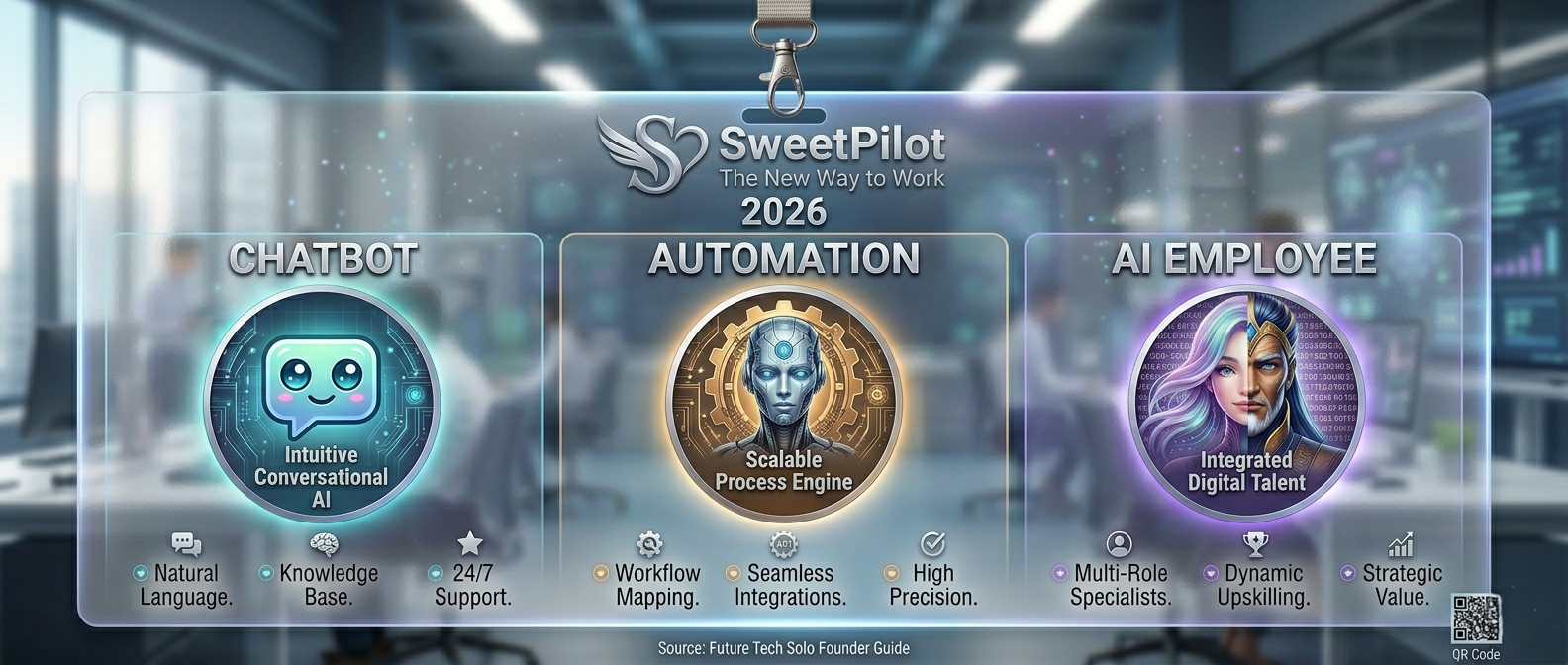
The three categories overlap, but they aren't the same thing.
| Feature | Chatbot (ChatGPT) | Automation Tool (Zapier) | AI Employee (SweetPilot) |
|---|---|---|---|
| Role specialization | No | No | Yes |
| Brand memory | Limited | None | Yes (Brain AI) |
| Generates finished work | Yes, with prompting | No | Yes |
| Task scheduling | No | Yes | Yes |
| Multi step reasoning | Yes | No | Yes |
| Connects to your tools | Limited | Yes | Yes |
| Covers a role's routine work | No | No | Yes |
The shorthand:
- A chatbot answers questions.
- An automation tool moves data between apps.
- An AI employee does the actual work.
You can stack all three in a real business, but only one of them ships finished output.
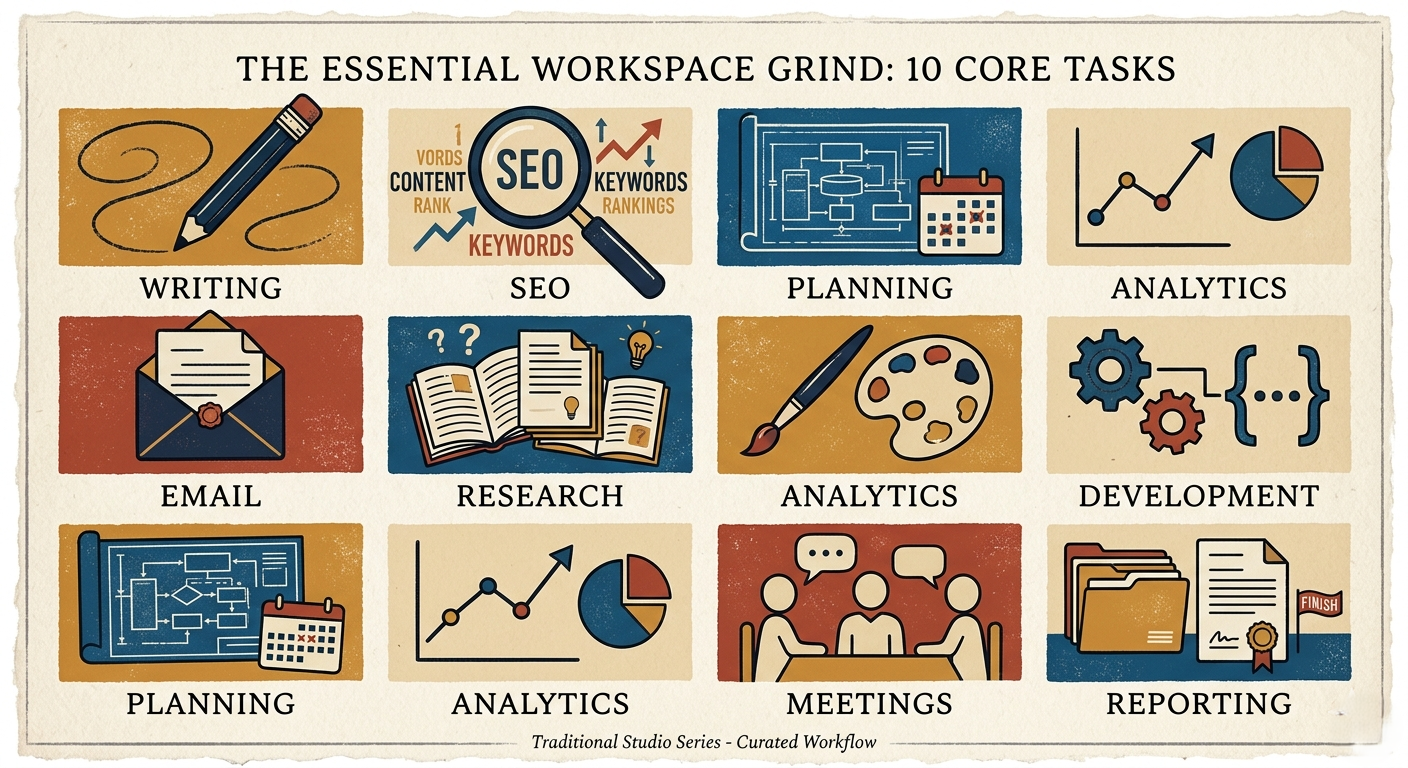
10 Real Tasks AI Employees Handle Today
This isn't theoretical. Here's what AI employees handle in production right now across SMBs, agencies, and ecommerce brands:
- Content writing. Blog posts, long form articles, brand voice tuned drafts.
- SEO audits. On page analysis, keyword targeting, internal linking suggestions.
- Social media posting. Caption writing, scheduling, and platform specific tone shifts.
- Email drafting. Welcome sequences, newsletters, transactional copy, follow ups.
- Customer support replies. Trained on help docs and past tickets, drafted in your tone.
- Reports. Weekly performance summaries, KPI dashboards, exec ready briefs.
- Ad copy. Headlines, body copy, and variations for paid campaigns.
- Research. Competitor teardowns, market analysis, trend reports.
- Calendar and meeting management. Scheduling, rescheduling, agenda drafting.
- Data entry and enrichment. Cleaning lists, enriching CRM records, updating databases.
Every task on this list used to require a human. In 2026 most of them don't.
Meet SweetPilot's AI Team
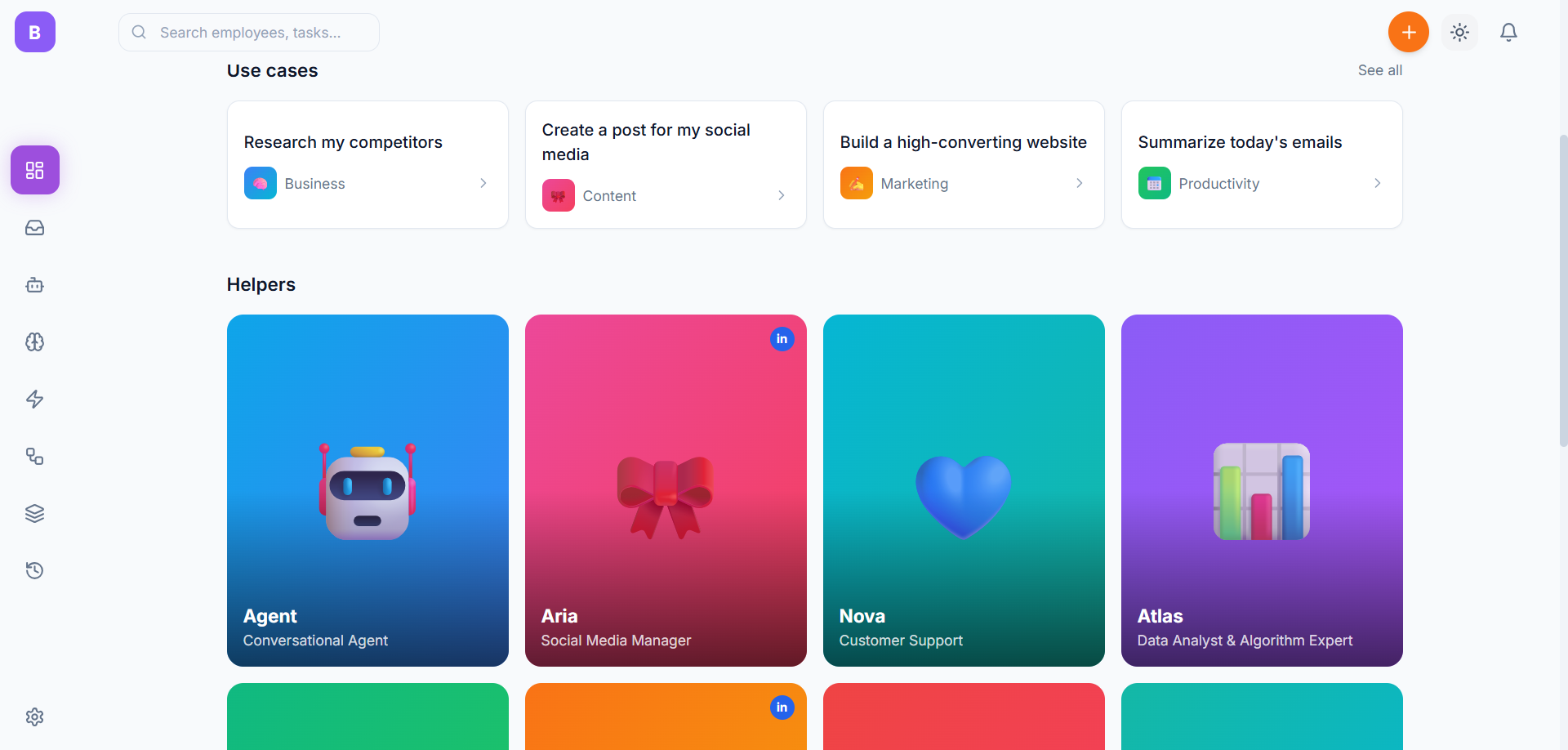
SweetPilot has 17 AI employees. Here are three of them, with examples of the work they do.
Ink, Copywriting
Role: Copywriter.
Handles: Blog posts, landing pages, email sequences, product descriptions, brand storytelling.
Example output: Give Ink a topic and an audience, and it returns a structured article draft in your brand voice with an outline, intro, body, FAQs, and CTA. It reads the documents you add to Brain AI, so its tone can follow your past content.
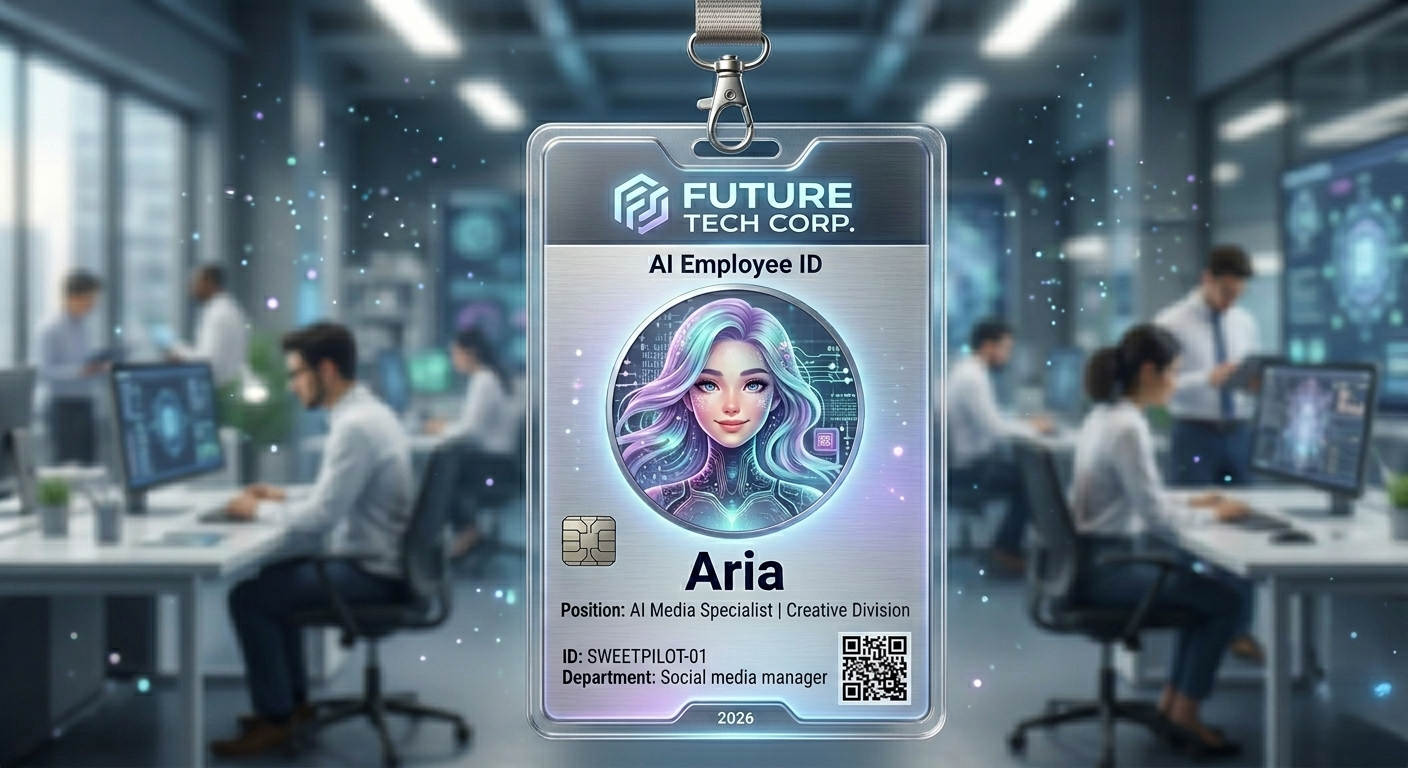
Aria, Social Media
Role: Social media manager.
Handles: Caption writing, content calendars, post scheduling, platform specific tone, hashtag strategy.
Example output: Ask Aria for a week of LinkedIn posts and she returns seven captions written for the platform, each one tied to your product positioning and audience pain points. With a connected account, posts can be scheduled from the content calendar.
Atlas, Data Analysis
Role: Data analyst.
Handles: Spreadsheet and CSV analysis, weekly summaries, KPI tracking, trend analysis, exec ready briefs.
Example output: Attach last week's traffic, revenue, and engagement export as a CSV, or point Atlas at a connected Google Sheet. It identifies the three biggest movers and writes a one page summary with recommendations.
The other 14 employees on the SweetPilot roster cover SEO, sales outreach, customer support, email marketing, recruiting, ecommerce, strategy, and more. Every employee reads from the same Brain AI, so the team works from one set of facts about your business.
How to Get Started with AI Employees in Your Business
You don't need a tech team or a six month rollout. Three steps:
Step 1: Choose a Plan
Create a SweetPilot account and choose a plan. Plans start at $9 per month (Starter, 350 credits), and every plan includes all 17 AI employees and the same features. There is no free plan; every plan comes with a 14 day money back guarantee.
Step 2: Pick Your First Agent
Start with the role that consumes the most of your time today. Good first choices are Ink for content, Aria for social, or Nova for customer replies. You don't need to onboard all 17 at once.
Step 3: Train with Brain AI
Upload your brand docs, product info, SOPs, and example output into Brain AI. The more context you load, the more your AI employee sounds like you.
That's it. From there you assign tasks, set schedules, and let your AI team run alongside your human one.
FAQs
Q1: Are AI employees replacing human employees?
Answer: For most businesses, no. AI employees handle execution work (writing, replying, drafting, scheduling, reporting) that used to consume your team's day. Human employees still set strategy, manage exceptions, own customer relationships, and make judgment calls. The result is a smaller human team doing higher value work alongside a larger AI team handling production.
Q2: How much does an AI employee cost?
Answer: Far less than a human hire. SweetPilot has four plans: Starter at $9 per month (350 credits), Pro at $45 (2,100 credits), Professional at $90 (4,200 credits), and Enterprise at $270 (14,000 credits). Every plan includes all 17 AI employees. There is no free plan, and each plan comes with a 14 day money back guarantee. Compared to a junior hire at thousands per month, a full AI team costs a fraction of one human salary.
Q3: What tasks can AI employees do?
Answer: Content writing, SEO audits, social posting, email drafting, customer support replies, reporting, ad copy, research, scheduling, data entry, sales outreach, and more. Anything that involves writing, drafting, analyzing, or routine decision making is on the table in 2026.
Q4: How is an AI employee different from ChatGPT?
Answer: ChatGPT is a general purpose chatbot. An AI employee is a specialized virtual worker with a defined role, a memory of your business, and the ability to ship finished deliverables on a schedule. ChatGPT answers questions. An AI employee does the work.
Q5: Do AI employees need training?
Answer: A little. Out of the box every SweetPilot agent works on day one. To get output that sounds exactly like your brand, you upload your docs, brand voice, and SOPs into Brain AI. The first upload takes minutes, and you can keep adding documents over time.
Q6: Can AI employees work with my existing tools?
Answer: Yes. SweetPilot connects to Gmail, Google Calendar, Google Docs, Google Sheets, Google Drive, Slack, Discord, and Trello, plus Facebook, Instagram, LinkedIn, and X for social posts. It does not connect to a CRM such as HubSpot or Salesforce yet.
Conclusion
An AI employee isn't a chatbot, a prompt template, or a clever automation. It's a specialized virtual worker that holds a real role, learns your business, and ships finished work alongside your human team. In 2026 the businesses pulling ahead are the ones that figured this out early and started hiring AI alongside humans rather than treating AI as a side project.
SweetPilot makes it easy to start. 17 named AI employees like Ink, Aria, and Atlas covering the main business functions. Plans from $9 per month with the same features on every plan. Brain AI training that starts with the documents you already have.
Meet your AI team at SweetPilot. Choose a plan, assign your first task, and see what a virtual worker actually delivers. If it is not for you, the 14 day money back guarantee applies.